All the content in the blog is available free of charge and can be found in the menu to the left.
Please feel free to scroll down in order to become acquainted with all the content which might possibly be of interest or of service to you

30/05/2013

Heading towards a change in Israeli legislation?

Following the meeting in ILITA (Israeli Law, Information and Technology Authority in the Ministry of Justice); I had a meeting at the Ministry of Justice in early April 2013 with the following representatives: the Head of litigation and advisory department, attorney Erez Kaminitz, Director of Intellectual Property Law; attorney Howard Poliner ; attorney Ariel Zvi and interns Yishai Pearlman and Moshe Frucht; and attorney Nir Gerson, who is Head of Technology at ILITA.

I introduced the following topics: digital legacy, digital estate planning, digital and virtual assets and property; and have briefly reviewed the situation in these fields, both generally and legally:


I presented the current situation in Israel: No network provider publishes its policy in case of death of the user; some have questionable policies; another company has yet to answer: 
We focused on Israeli inheritance laws, and deconstructed basic concepts: will the definitions used worldwide will also apply here? The word inheritance bears legal meanings when using the terminology of digital inheritance, and decisions about how to treat such meanings in Israel has yet to be taken. 

This was an initial meeting, to mark the beginning of a process, but I did left the meeting feeling that such process exists, as well as people to communicate with in his regard. I met people who, recognizing the importance of this subject, appeared genuinely interested in learning more; and I do hope that as a result, Israeli legislation will eventually be changed.

I will keep updating. 


Thank you Noa Ron for translating this post. 

27/05/2013

Google's new solution: Inactive Account Manager

Google posted an announcement on their blog on April 11th, 2013 that caused a stir, about a new service they are launching: Inactive Account Manager. More information is available here, on Google's general support, under "User Accounts".

The service allows users to pre-set for each of their Google accounts (Blogger, Google+, Picasa, YouTube) what they would like to have happen with these accounts in case something happens to them: would they like for the account to be deleted, should a family member or close friend be given access to the account and if so who, and what are the contact details for the people (up to ten) who may be allowed access.

Activating the service doesn't necessarily have to result from something as terminal as death, but rather even through something temporary like memory loss, accident, disease, disability, injury or anything else that may cause us to lose track of our account password, or to become unable to operate it.

These kinds of services have been widely available in the past - but not through the providers themselves, being offered instead through external companies that specialize in digital estate management or digital heritage. A partial list of these can be found in this post. Google is the first online service provider to be offering these services itself.

There's a difference between allowing users to choose and decide for themselves what they plan to do with their digital or virtual assets after they die - a service that until now we've only seen from specialist asset management companies - and the provider's policy determining what happens to users' digital or virtual assets after they die, without their choosing or deciding on it - which is the policy that we've seen up till now (you can find many example in this post. Google is the first trailblazer in this regard.

Google writes about their service

What should happen to your photos, emails and documents when you stop using your account? Google puts you in control.
You might want your data to be shared with a trusted friend or family member, or, you might want your account to be deleted entirely. There are many situations that might prevent you from accessing or using your Google account. Whatever the reason, we give you the option of deciding what happens to your data. 
Using Inactive Account Manager, you can decide if and when your account is treated as inactive, what happens with your data and who is notified.
Google allows users to define for each account what is the time period allowed until this account is defined as inactive: three, six, nine, 12, 15 or 18 months. The timer starts from the last time you logged into the account:

You set a timeout period, after which your account can be treated as inactive. The timeout period starts with your last sign-in to your Google account.

And on the next screen:

Google explains that it measures activity on several parameters: account logins (typing in your username and password), using the Gmail app on your mobile and using location tags (check-ins) on Android.

After the timeout period you've set-up for defining the account as inactive is nearly over, you'll receive a warning by SMS and an email sent to the alterative email address (the same address used to restore your forgotten Google account password), informing you that the account will soon be tagged as inactive, and that your pre-set instructions will take effect. The warning allows you to enter your account and stop the activation in case this is not the "real thing".

Inactive Account Manager will alert you via text message and optionally email before the timeout period ends.

And on the next screen:


If you chose for the account to be deleted, it will be erased completely, including anything you've publicly posted using this account.

If you wish, instruct Google to delete your account on your behalf.

And on the next screen:


Google allows you to define contacts for one of two purposes: to let them know the account has become inactive, or to allow them access to its content. If you chose to allow a person or several people access to your account's content, you'll need to provide Google with both their email address and phone number, so that there's no fear of the information falling into the wrong hands (if a friend or family member's account is hacked, for example).

Add trusted contacts who should be made aware that you are no longer using your account. You can also share data with them if you like.

And on the next screen:


While defining your trusted contacts as such they will not receive a notification message - it's up to the user whether or not to let them know about their new role. Google will only make contact with them whenever the inactive account instructions take effect.

If you chose only to inform them, the email message will look like this:

John Doe (john.doe@gmail.com) instructed Google to send you this mail automatically after John stopped using his account.
Sincerely,The Google Accounts Team
If you chose to provide them with access to your account, the email from Google will look like this:
John Doe (john.doe@gmail.com) instructed Google to send you this mail automatically after John stopped using his account.
John Doe has given you access to the following account data:
+1s 
Blogger
Drive 
Latitude 
Mail 
Picasa
Web Albums 
YouTube 
Download John's data here
Sincerely,The Google Accounts Team
Note that unlike the solutions from digital estate or digital heritage management companies, Google will not give your chosen contacts your account password - or the ability to use it - just the option of downloading the information.

When I was in London in October 2012 at the Digital Death Day unconference, I gave the discussion I initiated the title: What can be done that hasn't yet? And what I suggested was exactly this: transfer the handling of these issues from external companies to the providers themselves.

The solution I suggested was that in the same way that signing up for an online service requires checking a box that confirms that we've read the terms of service, and without which you cannot join, that immediately after that you would have a second mandatory box where you would need to specify what you'd like to happen to this account after you die. And just as we sometimes have to confirm our password or set a new one, that we would periodically need to confirm that decision. The post detailing my unconference experience can be found here.

I'm glad to see Google taking a huge step in this direction and offering an "in house" solution - but the fact that it's optional rather than mandatory makes it good but not very good.


I thank many people who sent me the link to Google's new policy when it was published, and especially Paul Solomon, Head of Communications & Public Affairs in Google (Israel & Greece) , that kindly sent me the link immediately after it was first posted.


Thank you Uri Gonda for translating this post. 

I wrote a separate post with my thoughts regarding this tool. 

Change in Israeli Policy – Before the First Israeli Tragedy Strikes

I had a meeting in ILITA – The Israeli Law, Information and Technology Authority within the Ministry of Justice – in late February 2013, with advocates Amit Ashkenazi, head of the Legal Department, and Nir Garson, head of Technology.

In February 2013, the US Senate approved a measure in Virginia that will make it easier for bereaved parents (or guardians) to obtain access to their children's social network accounts, if they have died while still minors.

The people who "got the ball rolling" in this instance were grieving parents Ricky and Diane Rash, who are longing to find what drove their 15 year old son, Eric, to commit suicide. Facebook, guarding Eric's privacy, refused to divulge the password.

In the meeting, I said: "Let's not wait for the first Israeli tragedy to 'get the ball rolling' within the system. Let's get it rolling already".
  1. Firstly, it seems to be a basic, moderate requirement, to have every Israeli Internet provider publish their policy in case of a user's death. Users deserve to know said provider's policy while they are still living (what if they don't agree with the policy, once they are aware of it?). Family and friends should also be aware of its policy, in case tragedy strikes, and they need to contact the provider to obtain access to the deceased's online material. 
    I continue to circulate the data I have culled from the eight Israeli providers, as specified in the Technical Guide and the Israeli Angle of Digital Death, but it is imperative that this information be widely available, not only through my personal blog. Also, I keep the list updated – for instance, I have approached the Saloona blog service twice regarding their policy in case of a user's death, on 21/1/13 and 12/2/13, but have yet to receive an answer.

    If there will be a regulatory demand for all providers to a) know their own policy and b) publish their policy online, we will already make progress.
  2. Secondly, I believe there should be a default option: just like the terms and conditions checkbox users must tick when joining any online service, another checkbox should be presented, in which the user agrees with the provider's policy in terms of digital legacy (allow or deny access in case anything happens to them, and if so to whom).
  3.  In addition, digital and virtual assets should be included within probate and inheritance laws, and use of digital legacy storage and guardian services should be encouraged, by adding a digital will to the legally valid wills in Israel (currently the only form of will addressed by court is a printed one – court will not address digital wills, even if signed with a trusted digital signature. More on this can be found in the Legal Aspect post).

It was an interesting conversation that included many issues such as digital legacy, the right for privacy, the right for perusal after death and the difference between Israeli and U.S. legislation.

I'll update on any developments.


Thank you Ayelet Yagil for translating this post. 

14/05/2013

Google’s Policy - an update

Google’s Policy in case of death of a gmail account user is known and published. There are detailed guidelines, which can be found in the Gmail help tab under ‘Accessing a deceased person’s mail’. (You can also find it here in my blog, under the technical guide). 


In cases of death of a YouTube user, however, Google’s policy used to be published but was later taken offline


If you search for the word Deceased on the YouTube Help tab, the message you get is ‘Your search - deceased - did not match any answers in YouTube Help

A similar message appears when you search on Blogger; the word Deceased simply does not exist.

I turned to Google’s International Spokespeople on 22/7/12, 23/7/12, 4/12/12 and 12/2/13 to ask if there was an all-round policy for all Google products, or does the policy change from one product to another? I also asked why only the gmail users policy was published. So far I have not received a response. 

I then turned to Paul Solomon, director of communications and Spokesmanship for Google Israel and Greece, who responded immediately. Turns out Google does have a single policy, which is relevant to all their products. It appears under their general Help tags, under Accounts. Mr. Solomon also wrote: 
‘Protecting our users' security and privacy is vital, and we're constantly working to earn their trust. That means putting our users first when we receive requests for their personal information, even when it's from a grieving family. It's important for our users to know that, even after they've passed away, we'll keep their information secure and respect their reasonable privacy interests. We won't provide the private information stored in a deceased user's Google Account to family members unless a U.S. court order compels us to do so.  …  I should also say that we’re continuing to explore solutions to this very difficult issue. ‘
I pointed out to him that the manner in which this policy is published could be misleading. A person searching for the word deceased under Gmail-Help can immediately see that Google has a policy on this matter, however if the same person searches on YouTube and his search yields nothing, such a person will most likely assume that Google does not have a policy for YouTube. He/she is very unlikely to assume that there is a policy, but it is stated elsewhere. I find it hard to believe that any surfer will understand that they should keep searching for the word again, only under a different help tab, and that the response that appears there will be valid for YouTube users. This is particularly not obvious if the person searching is in mourning and/or is not too familiar with searching the internet.
Mr. Solomon promised me he would forward my suggestion that Google’s policy would be included in the Help tab of each and every Google Product, to the relevant parties at Google international.

I will continue to update on this.


Thank you Perla Mitrani - Aviram for translating this post. 

03/04/2013

(Another) Gamer Immortalized in a Game

The article about James Payne, the British gamer who died of cancer and was immortalized in a game: Cancer patient is immortalised as 3D character in PC game, published on March 25th 2013 on Yahoo! UK & Ireland news,


24 years old James Payne passed away this year.
In October 2013 he will "star" as a commander in a Roman legion in Total War: Rome II

Reminded me of the interview I held with the famous gamer Jon NEVERDIE Jacobs, who immortalized Tina, his gamer fiance who passed away, as an avatar in a game he created 


Tina Leiu, passed away, 2005 

Tina Leiu's avatar, Island Girl, immortalized in 2010 in Next Island game

The full interview with Jon NEVERDIE Jacobs can be found here. Some of it was published in an article I wrote for ynet, here

07/03/2013

How to notify of a death in this digital era - part 2

Receiving news regarding death is never easy, but is there a difference if you are notified by a phone call, through a newspaper obituary, text message, tweet or Facebook news feed update, than receiving an invitation to a funeral in a Facebook event?

Is there a need for new social conventions about what is acceptable or polite in the digital era, and what isn't?


Social conventions have already changed somewhat: in the past, it was customary to call when you wanted to say "Happy Birthday" or "Happy New Year". Today, more people prefer to text, and many post on friends’ Facebook pages. It’s also acceptable to get birthday party invitations - or even news of engagement and marriage - online.


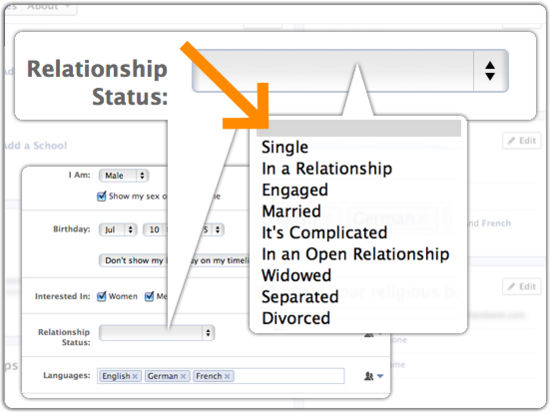
Updating the relationship status in Facebook


It's interesting to note that what is acceptable in Israel regarding birthdays and engagements isn’t (yet?) acceptable, as far as weddings are concerned: it is still customary here to send printed wedding invitations by mail, and often to deliver them by hand. Elsewhere, electronic wedding invitations are common, and RSVPing is done online. (Amit Bar-Tzion, CEO and Founder of easywed, confirms that it's not only my personal impression: "There are some online invitations in Israel, but only a few. Print rules the day").
Will the social conventions in Israel change, and in the future will we accept online wedding invitations as a matter of routine


Wedding attendance - online RSVP

In Israel, we have grown to accept electronic invitations to a memorial service, to a "Shivah" (a Jewish tradition: marking the first seven days of mourning) or to a "Shloshim" (marking the first 30 days of mourning). What about electronic notices regarding death or a funeral? Are these in the same range of Israeli social conventions as weddings? What will make an online wedding invitation - or a funeral invitation - personal enough for us to feel comfortable sending and receiving them?


Are norms of "acceptable" or "polite" online affected by the social conventions in that geographical region? In Israel, religious Jewish funerals are held as soon as possible after death, sometimes as early as the same day. Elsewhere, a few days can pass from the moment of death to the funeral or service. 


In Israel, compared to abroad, there is a need to let as many people know as possible, as fast as possible, so social networks, emails etc. should have been accepted here as a legitimate way, because they answer those needs. Is there more inclination - and more time - abroad, to prepare personalized, designed invitations to a funeral or a service, which isn't available here? Will this turn the Israelis into people who more readily accept notices of bad tidings through digital formats?

A cousin of a friend of mine passed away unexpectedly. Her mother wrote on her daughter’s Facebook timeline a message: "She is no longer with us", along with the date and time of her funeral. Another cousin of his saw it and wrote to my friend: "I saw something strange posted on our cousin's Facebook page. Is this a joke?". My friend had to tell him that, sadly enough, it wasn’t.

My friend C. recently found out twice through Facebook about deaths: the first time was when the husband of her dear friend S., who passed away after a long term of illness, wrote on S.'s profile - and through her user, not through his - that she passed away, along with the details regarding the funeral. The second time was when three mutual friends of C. and her friend A. wrote in Facebook that they couldn't believe A. was gone - and she didn't know neither that he passed away nor under which circumstances it happened.
I'm guessing no one would like to find out like this


Will writing on Facebook replace coming in person to a memorial service, as writing in Facebook replaces making a phone call on a birthday? Will social networks replace the way we mark sad occasions, in the same way they changed the way we mark happy ones? Or will funerals and memorial services, like weddings, remain in the area in which we feel more comfortable in the physical sphere, rather than in the virtual one?
Will the next stage be that funerals be broadcast live on the Internet? Will it make us feel closer, as those who can't attend in person will at least be able to watch? Or will it make us feel farther apart, because less people will attend the funeral in person, and prefer watching it from afar? Will a social norm - under which it is legitimate to tweet your condolences -create a society in which more people will pay their virtual respects, and less people will be there to comfort grievers in person?  

Mourning on Twitter - from Life Insurance Finder's infographics


Andriana Cassimatis' mother passed away in 2007. In an interview to Digital Dust, she wrote: 
had so many other things to organize before the funeral, that calling each and every guest to tell them all of the details such as time, place and directions seemed a daunting task. Of course I phoned close family and friends to notify them of the actual death, but then I followed that brief phone call up with an email that contained a link to a custom website I had made for her, which contained all of the practical details. It worked very well. I was free to focus on other things and all of the guests found their way to the event. 
Andriana had four days between the time her mother passed away and the time the ceremony was held - time enough to create and upload this mini site. She also used this site as a way to communicate with the guests, asking them, for example, instead of bringing or sending flower arrangements, to make a donation to a specific breast cancer foundation. (this solution worked perfectly for her, but it doesn't mean someone else might not feel differently: that a website is too cold or too estranged of a solution, and would prefer to make these phone calls in person, or maintain direct interactions with the other grievers).   
Andriana: 
In the past three - four years, funeral homes have started to promote the practical details of funeral events on their websites. There are also a handful of memorial sites which are beginning to offer this information as well. The problem for me is that none of these sites seems sincere or personal in any way. The overall visuals and content have never been updated to reflect our design conscious generation or include different cultures. 
Here is an example of an online invitation a funeral home posted when her aunt passed away:
As you can see, it's attached to the funeral home's main site and it has all the practical details - it's just void of any personality or representation of that person. 
Andriana feels... 
"There will never be a more appropriate event when using technology is of great benefit - usually due to tight time constraints concerning burial or cremation traditions. Technology allows us to notify a lot of people all at once. But by the very personal nature of death itself, people are still struggling with what is acceptable etiquette. That is why finding a good bridge between these two - technology and sincerity - is the key. Yes, people are much more likely to send online invitations to happy occasions such as weddings and birthdays and that is where we see the most creativity happening. Death in terms of creativity has stayed nearly stagnant".  
Following her personal experience, when she felt technology and the net failed to serve her in her hour of need. Andriana created a website which went online two weeks ago, titled Sympathy Project, offering "an online service tailored specifically for the communication around illness and death". 


Will this turn out to be a solution, and is this solution inevitable? Will there be online death notifications, only designed in a more personal way? Or will death remain in the realm we're uncomfortable to take part in virtually? 


Some of what I wrote here is in continuation to a discussion held in Digital Death Day unconference held in London in October 2012. The notes I took during it are available here


How to notify of a death in this digital era - part 1 is available here

06/03/2013

3D holograms of Holocaust survivors allows their stories to live on

"New Dimensions in Testimony" is a new initiative, collaboration between two USC (University of Southern California) institutes: Shoah Foundation and Institute for Creative Technologies, along with Conscience Display. CNET wrote about it in February 2013. 

Interviews with Holocaust survivors will be recorded using new technologies, creating testimonies projected in 3D, developing "interactive 3-D exhibits in which learners can have simulated, educational conversations with survivors though the fourth dimension of time... using a natural language technology will allow people to engage with the testimonies conversationally by asking questions that trigger relevant, spoken responses". A bit like Siri's ability to "hold a conversation". 


I think this project is of tremendous importance, preserving stories of Holocaust survivors for future generations, but I wonder if this is a beginning for self commemoration on a larger scale. 

 
A "conversation" between a Holocaust survivor and students 

Self commemoration solutions can be found here, and more companies offering advanced technological solutions can be found in my ynet articleYou Can Live After Death. Almost.