All the content in the blog is available free of charge and can be found in the menu to the left.
Please feel free to scroll down in order to become acquainted with all the content which might possibly be of interest or of service to you

14/05/2013

Google’s Policy - an update

Google’s Policy in case of death of a gmail account user is known and published. There are detailed guidelines, which can be found in the Gmail help tab under ‘Accessing a deceased person’s mail’. (You can also find it here in my blog, under the technical guide). 


In cases of death of a YouTube user, however, Google’s policy used to be published but was later taken offline. 


If you search for the word Deceased on the YouTube Help tab, the message you get is ‘Your search - deceased - did not match any answers in YouTube Help’

A similar message appears when you search on Blogger; the word Deceased simply does not exist.

I turned to Google’s International Spokespeople on 22/7/12, 23/7/12, 4/12/12 and 12/2/13 to ask if there was an all-round policy for all Google products, or does the policy change from one product to another? I also asked why only the gmail users policy was published. So far I have not received a response. 

I then turned to Paul Solomon, director of communications and Spokesmanship for Google Israel and Greece, who responded immediately. Turns out Google does have a single policy, which is relevant to all their products. It appears under their general Help tags, under Accounts. Mr. Solomon also wrote: 
‘Protecting our users' security and privacy is vital, and we're constantly working to earn their trust. That means putting our users first when we receive requests for their personal information, even when it's from a grieving family. It's important for our users to know that, even after they've passed away, we'll keep their information secure and respect their reasonable privacy interests. We won't provide the private information stored in a deceased user's Google Account to family members unless a U.S. court order compels us to do so.  …  I should also say that we’re continuing to explore solutions to this very difficult issue. ‘
I pointed out to him that the manner in which this policy is published could be misleading. A person searching for the word deceased under Gmail-Help can immediately see that Google has a policy on this matter, however if the same person searches on YouTube and his search yields nothing, such a person will most likely assume that Google does not have a policy for YouTube. He/she is very unlikely to assume that there is a policy, but it is stated elsewhere. I find it hard to believe that any surfer will understand that they should keep searching for the word again, only under a different help tab, and that the response that appears there will be valid for YouTube users. This is particularly not obvious if the person searching is in mourning and/or is not too familiar with searching the internet.
Mr. Solomon promised me he would forward my suggestion that Google’s policy would be included in the Help tab of each and every Google Product, to the relevant parties at Google international.

I will continue to update on this.


Thank you Perla Mitrani - Aviram for translating this post. 

03/04/2013

(Another) Gamer Immortalized in a Game

The article about James Payne, the British gamer who died of cancer and was immortalized in a game: Cancer patient is immortalised as 3D character in PC game, published on March 25th 2013 on Yahoo! UK & Ireland news,


24 years old James Payne passed away this year.
In October 2013 he will "star" as a commander in a Roman legion in Total War: Rome II

Reminded me of the interview I held with the famous gamer Jon NEVERDIE Jacobs, who immortalized Tina, his gamer fiance who passed away, as an avatar in a game he created 


Tina Leiu, passed away, 2005 

Tina Leiu's avatar, Island Girl, immortalized in 2010 in Next Island game

The full interview with Jon NEVERDIE Jacobs can be found here. Some of it was published in an article I wrote for ynet, here. 

07/03/2013

How to notify of a death in this digital era - part 2

Receiving news regarding death is never easy, but is there a difference if you are notified by a phone call, through a newspaper obituary, text message, tweet or Facebook news feed update, than receiving an invitation to a funeral in a Facebook event?

Is there a need for new social conventions about what is acceptable or polite in the digital era, and what isn't?


Social conventions have already changed somewhat: in the past, it was customary to call when you wanted to say "Happy Birthday" or "Happy New Year". Today, more people prefer to text, and many post on friends’ Facebook pages. It’s also acceptable to get birthday party invitations - or even news of engagement and marriage - online.


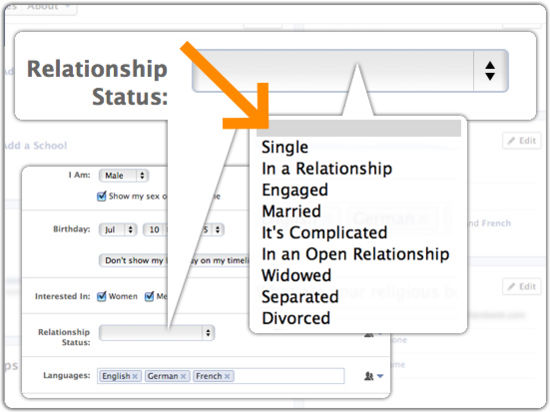
Updating the relationship status in Facebook


It's interesting to note that what is acceptable in Israel regarding birthdays and engagements isn’t (yet?) acceptable, as far as weddings are concerned: it is still customary here to send printed wedding invitations by mail, and often to deliver them by hand. Elsewhere, electronic wedding invitations are common, and RSVPing is done online. (Amit Bar-Tzion, CEO and Founder of easywed, confirms that it's not only my personal impression: "There are some online invitations in Israel, but only a few. Print rules the day").
Will the social conventions in Israel change, and in the future will we accept online wedding invitations as a matter of routine? 


Wedding attendance - online RSVP

In Israel, we have grown to accept electronic invitations to a memorial service, to a "Shivah" (a Jewish tradition: marking the first seven days of mourning) or to a "Shloshim" (marking the first 30 days of mourning). What about electronic notices regarding death or a funeral? Are these in the same range of Israeli social conventions as weddings? What will make an online wedding invitation - or a funeral invitation - personal enough for us to feel comfortable sending and receiving them?


Are norms of "acceptable" or "polite" online affected by the social conventions in that geographical region? In Israel, religious Jewish funerals are held as soon as possible after death, sometimes as early as the same day. Elsewhere, a few days can pass from the moment of death to the funeral or service. 


In Israel, compared to abroad, there is a need to let as many people know as possible, as fast as possible, so social networks, emails etc. should have been accepted here as a legitimate way, because they answer those needs. Is there more inclination - and more time - abroad, to prepare personalized, designed invitations to a funeral or a service, which isn't available here? Will this turn the Israelis into people who more readily accept notices of bad tidings through digital formats?

A cousin of a friend of mine passed away unexpectedly. Her mother wrote on her daughter’s Facebook timeline a message: "She is no longer with us", along with the date and time of her funeral. Another cousin of his saw it and wrote to my friend: "I saw something strange posted on our cousin's Facebook page. Is this a joke?". My friend had to tell him that, sadly enough, it wasn’t.

My friend C. recently found out twice through Facebook about deaths: the first time was when the husband of her dear friend S., who passed away after a long term of illness, wrote on S.'s profile - and through her user, not through his - that she passed away, along with the details regarding the funeral. The second time was when three mutual friends of C. and her friend A. wrote in Facebook that they couldn't believe A. was gone - and she didn't know neither that he passed away nor under which circumstances it happened.
I'm guessing no one would like to find out like this: 


Will writing on Facebook replace coming in person to a memorial service, as writing in Facebook replaces making a phone call on a birthday? Will social networks replace the way we mark sad occasions, in the same way they changed the way we mark happy ones? Or will funerals and memorial services, like weddings, remain in the area in which we feel more comfortable in the physical sphere, rather than in the virtual one?
Will the next stage be that funerals be broadcast live on the Internet? Will it make us feel closer, as those who can't attend in person will at least be able to watch? Or will it make us feel farther apart, because less people will attend the funeral in person, and prefer watching it from afar? Will a social norm - under which it is legitimate to tweet your condolences -create a society in which more people will pay their virtual respects, and less people will be there to comfort grievers in person?  

Mourning on Twitter - from Life Insurance Finder's infographics. 


Andriana Cassimatis' mother passed away in 2007. In an interview to Digital Dust, she wrote: 
I had so many other things to organize before the funeral, that calling each and every guest to tell them all of the details such as time, place and directions seemed a daunting task. Of course I phoned close family and friends to notify them of the actual death, but then I followed that brief phone call up with an email that contained a link to a custom website I had made for her, which contained all of the practical details. It worked very well. I was free to focus on other things and all of the guests found their way to the event. 
Andriana had four days between the time her mother passed away and the time the ceremony was held - time enough to create and upload this mini site. She also used this site as a way to communicate with the guests, asking them, for example, instead of bringing or sending flower arrangements, to make a donation to a specific breast cancer foundation. (this solution worked perfectly for her, but it doesn't mean someone else might not feel differently: that a website is too cold or too estranged of a solution, and would prefer to make these phone calls in person, or maintain direct interactions with the other grievers).   
Andriana: 
In the past three - four years, funeral homes have started to promote the practical details of funeral events on their websites. There are also a handful of memorial sites which are beginning to offer this information as well. The problem for me is that none of these sites seems sincere or personal in any way. The overall visuals and content have never been updated to reflect our design conscious generation or include different cultures. 
Here is an example of an online invitation a funeral home posted when her aunt passed away:
As you can see, it's attached to the funeral home's main site and it has all the practical details - it's just void of any personality or representation of that person. 
Andriana feels... 
"There will never be a more appropriate event when using technology is of great benefit - usually due to tight time constraints concerning burial or cremation traditions. Technology allows us to notify a lot of people all at once. But by the very personal nature of death itself, people are still struggling with what is acceptable etiquette. That is why finding a good bridge between these two - technology and sincerity - is the key. Yes, people are much more likely to send online invitations to happy occasions such as weddings and birthdays and that is where we see the most creativity happening. Death in terms of creativity has stayed nearly stagnant".  
Following her personal experience, when she felt technology and the net failed to serve her in her hour of need. Andriana created a website which went online two weeks ago, titled Sympathy Project, offering "an online service tailored specifically for the communication around illness and death". 


Will this turn out to be a solution, and is this solution inevitable? Will there be online death notifications, only designed in a more personal way? Or will death remain in the realm we're uncomfortable to take part in virtually? 


Some of what I wrote here is in continuation to a discussion held in Digital Death Day unconference held in London in October 2012. The notes I took during it are available here. 


How to notify of a death in this digital era - part 1 is available here. 

06/03/2013

3D holograms of Holocaust survivors allows their stories to live on

"New Dimensions in Testimony" is a new initiative, collaboration between two USC (University of Southern California) institutes: Shoah Foundation and Institute for Creative Technologies, along with Conscience Display. CNET wrote about it in February 2013. 

Interviews with Holocaust survivors will be recorded using new technologies, creating testimonies projected in 3D, developing "interactive 3-D exhibits in which learners can have simulated, educational conversations with survivors though the fourth dimension of time... using a natural language technology will allow people to engage with the testimonies conversationally by asking questions that trigger relevant, spoken responses". A bit like Siri's ability to "hold a conversation". 


I think this project is of tremendous importance, preserving stories of Holocaust survivors for future generations, but I wonder if this is a beginning for self commemoration on a larger scale. 

 
A "conversation" between a Holocaust survivor and students 

Self commemoration solutions can be found here, and more companies offering advanced technological solutions can be found in my ynet article: You Can Live After Death. Almost.

25/01/2013

Updating Bereavement

Next week I will attend "Loss, Bereavement and Human Resilience in Israeli society" - a three days conference in Eilat, Israel, as a speaker in one of the sessions (website in Hebrew, document in English). 

While I'm reading the online booklet (Hebrew only, sorry) containing the abstracts of the many workshops, lectures, posters and symposiums taking place there, I am overcome by a powerful desire to physically grab these professionals, academics, personnel, clinicians, researchers, policy makers etc., by the lapels and shout at them: Wake up! - you have to stay updated if you want to remain relevant. 

The speakers divide the bereaved into many sub-groups: "Families who were subject to a euthanasia offense", "Bereaved siblings", "Bereaved parents", "Widows of the Defense Force", "Mothers of teenage orphans", "Bereaved girlfriends", "Orphans", "Widows of the Military system", "Orphans due to a terrorist attack", "Bereaved teenage siblings", "Bereaved mothers", "Families whose member committed suicide", "Grownups who lost both parents as teenagers due to a terrorist attack", "Parents who lost a son in war", etc. 

I understand the need to research and/or support each sub-group according to its needs, but there is one subject that connects all sub-groups and is relevant to them all (financially disadvantaged populations excluded, as they don't have computers nor Internet): all of these people will have to deal with the digital legacies left behind by the dead, and as the years progress, the volume of these legacies will only rise. 

The following image is by the Australian company Life insurance Finder, from their great 2012 infographics Step By Step Expert Guide To Protect Yourself Online Before You Die: 


How much of our history is digital? For people who are 65 years or older, 12%. For teenagers, we're already at 86%, and this data will rise as the younger generation, who grew up with a screen in front of them and a mouse and keyboard under their hands, will become adults. 

Which means that by now, all people who experience loss, grief and bereavement, regardless to which sub-group they belong to, will deal with digital legacies and the emotional, technical, ethical, philosophical and legal hardship and complications those bring. I worry that there is a disproportion between the need of such support and the awareness of the subject, not to mention the qualifications required (technical, spiritual, etc.) that are not yet acquired. 

16/01/2013

My notes during Digital Death Day 2012

Digital Death Day unconference was held in London in October 2012. These are the notes I took during it. More pictures can be found here. 


The day was divided into four time segments. Two discussions were held at the same time during each segment, and each attendee chose which one to join. Since it was an unconference, we suggested the topics for the sessions and their order on the spot and not in advance. The full agenda is available here. 


For the first segment, I joined Andriana Cassimatis's session: "Announcing Death and Mourning online - how to strike a personal / useful balance. Do we use technology to replace the act of togetherness or do we use it to facilitate it more effectively?" 


Stacey Pitsillides (left) and Andriana Cassimatis (right), 
co-organizers of Digital Death Day London 2012 


Group discussion: 
"How do people announce death online? In the US, a wake or a funeral is usually held after 3 days. In Israel, it can be held the same day, or the following day at the latest. If you use technology in general and the internet in specific, it will be very efficient, but will it be personal enough? 

What if you need to let friends and family know the details but don't want to pick up the phone? Is it OK to notify them via email / Facebook? If people are sending online invitation to a wedding, why not to a funeral? Is it OK to let certain communities know online, while others will still require a phone call? Do the answers to these questions vary according to geographical locations? or according to religious beliefs? Will conservative Christians refrain from posting such things online, for instance? 

How would you feel if you learned of a death through Facebook? Will you comfort / console / pay your respects through Facebook? Through Twitter? If we send virtual condolences, will less people attend the funeral / wake / seven days of mourning (Jewish tradition) in person? 

If we send our condolences through our online presence rather than in person - is it personal enough? Are we reaching through thanks to technology, or are we hiding behind our computers and remaining isolated? Are we expecting more of technology than we do of people? Is technology bringing us closer together, or making us feel more alone? 

How would you feel if you were invited to a funeral / wake through a Facebook event? Where do we draw the line? Will there be virtual funerals? Will there be live streamings of funerals? Will there be a funeral on skype? Will there be ads next to it? 

Will people keep going to funerals in person? Will broadcasting a funeral cause less people to go to it in person? Will people feel more distant? Or will people who can't attend the funeral feel closer, that they were able to at least attend virtually or view it while it was taking place? 

What is acceptable? With what will people feel comfortable? Is there an existing such format, or is there a need for developing a new format? 

What if the death is sudden, and the family is upset and haven't thought of a ceremony in advance - they would wish to "fall back" on the default, and there isn't a default yet. 

Will Google display death related ads, such as funeral homes, if you were to write the word death in an email in gmail? 

In Ireland there is a tradition of sending a proxy to the funeral in your name if you can't attend it in person. The proxy attends the funeral / wake in person in your stead - regardless to whether or not he knew the deceased. Is virtually attending a funeral / wake like sending a proxy of yourself to it?". 


For the second segment, I joined Yiota Demetriou's session: "Unstable Timeline (Identity on Facebook), Mourning on Social networks"

Group discussion: 
"In Cyprus, people change their profile picture to a black square when in mourning. 

The movie Never Sorry, about the famous Chinese artist Ai Weiwei, tells how "After the 2008 Sichuan earthquake, Ai used multiple media — art installations, video documentaries, Twitter — as he persistently investigated and questioned the official party line on student casualties... ... Ai continued to tweet and make works about China's lack of transparency..." (quotes from here). As a way to contradict the low, unrealistic number of earthquake victims the Chinese government publicly admitted, people used twitter: they collected names of dead people in each village and twitted that information on, to create a bigger picture. 

Self commemoration, self documentation: Yiota, for example, hasn't had a diary since she was 12. She does have an archive of herself, including audio recordings. 

Do we need QR codes on gravestones? We don't really know the deceased, what will more information about then mean to us? Isn't it better to have a bit of a mystery? Will it lead to 'grief tourism'? Is it one of our ways of trying to achieve immortality? Are we using technology just because it's there, or is it truly of service to us? 

Is there a point in trying to commemorate ourselves for future generations who never met us and don't know us? Our bodies deteriorate when we die - shouldn't our memory deteriorate with it? Our body will gradually no longer be - perhaps our data should gradually disappear too. 

Once people die, there is no new information regarding them, so the old information will be displayed on 'repeat', in a 'loop'. How will that affect the way we remember them? 

Some people are now buried with their mobile phone, so their loved ones will be able to text them whenever something of significance takes place, among other reasons. 

What happens to our online assets if the servers fail? What are we left with then? What will be left of us? 

Amazon erased George Orwell’s 1984 book from kindles of people who have purchased the book - or so they thought. To which virtual, digital and online assets do we actually hold the rights to?". 


During the third segment I initiated my own session: "What can be done that hasn’t been done yet?"

Group discussion: 
"Managing our digital legacy: can we learn from the Opt-in vs. Opt-out options regarding organ donors signing up? "Germany, which uses an opt-in system, has an organ donation consent rate of 12% among its population, while Austria, a country with a very similar culture and economic development, but which uses an opt-out system, has a consent rate of 99.98%" (quote from here). At the moment, few people manage their digital legacy, because it's an opt-in system. What if whenever you registered to an online service you would have to tick a box, just like you have to tick a box confirming you read the "terms of use", only this box will be about what would you like to happen to this account if something were to happen to you? - thus, changing the situation into an opt-out system. Just like we are asked to change our password periodically, we could be asked to confirm our choice of what were to happen to that account (deleted / access granted to person X via email Y / etc.). 

Kalyia Hamlin thinks this might be achieved, and the way to get it done will be to 1. make this technically possible, 2. offer companies to use it since it already exists, 3. encourage people to use this option since it is already being offered to them. She will spread this idea around OASIS-IDtrust and see what she can come up with. 

Another option is to have an online survey between internet users, and ask them: "would you like to have such an option?" If the results are positive, to approach internet companies such as Twitter etc. and tell them "This is what the people want, please implement this option into your system". To have a campaign in this regard. 

Perhaps a lobby is required: to address governments and demand law enforcement on digital legacy management. 

Other issues raised in this session were to go into the school educational system and implement digital studies into it, which will include taking personal responsibility for your online actions and assets. 

Another direction in need of further looking into is the ecological and environmental Implications of digital and virtual death (and/or digital and virtual life after death). 

Ann Cavoukian and her concept of "Privacy by Design" were mentioned, but I'm afraid I didn't write down the context - please feel free to remind me!


I'm afraid I didn't take any notes during the fourth segment, Stacey Pitsillides's session: "The future of digital death day? What is next for this community?"


These are only the notes that I personally scribbled during the sessions and are not an 'official' summary. 


I wish to take this opportunity to thank Stacey Pitsillides and Andriana Cassimatis for co-organizing this day, the wonderful people who crowdfunded my tickets into this unconference and Debbie Davies and Kate Bissell for their interviews during it. 

12/12/2012

A digital mausoleum?

Amazon launched a new service, Amazon Glacier, in August 2012. The Glacier offers to store, archive and back up data for a very low monthly cost: $0.01 per gigabyte.  

The storage is specifically designated to stow data that isn't accessed frequently, for which a retrieval time of several hours is suitable - just as we would put away boxes of folders for storage in a physical archive, located away from our home or office.


But what does that have to do with death in the digital era? 


When describing this service, Amazon uses the word "vault": "You use vaults to organize the archives you upload to Glacier" and phrases such as "
There is no limit to the amount of data you can store in the service" and "this data is often retained for years or decades. Amazon Glacier allows you to retain archived data for as long as desired."

What does it mean? 

On the one hand, it creates the possibility of a digital mausoleum: buy lots of storage space for cheap, upload to it anything you think our loved ones today - or generations to come - may find interesting, and take our self-commemoration one step further. It's secure, durable, simple, flexible and you pay only for what you use, making this a low cost service. The data we'll leave behind will no longer be divided among various computers and servers, between a cloud backup here and a portable hard disk backup there - it will all be centered in a single place, and our heirs will have a simpler, easier access to our digital legacy. 

On the other hand, if this really is a vault where our digital and online life are stored in multitudes, in case of a tragedy - when someone dies unexpectedly and didn't manage his digital inheritance - the loss of this legacy might be utter and complete. It won't a merely partial loss, as might happen today when only some of our legacy is stored with each of the various Internet providers (I intend to find out what is Amazon's policy in case of a death of a client and will let you know - I have - update below). 

One of the difficulties we're already dealing with today is the enormous, almost endless, amount of digital and virtual assets a person leaves behind when they pass. I explain this in detail in my post After death: the difference between dealing with digital assets and other assets. If more and more people were to use the Glacier service, their heirs will find themselves dealing with an amount of digital legacy which has truly become endless - no one will ever bother to sort or delete again. We shall all become hoarders and pile, collect, gather and store more and more pictures, files, emails, movies, music, books etc., in the Glacier - is the difficulty more apparent now? 


Another point to take into consideration is the ecological implications, which CNN wrote about in an article back in 2009: Greening the Internet: How much CO2 does this article produce?: "Massive buildings housing hundreds, if not thousands, of power hungry servers storing everything from Facebook photos and YouTube videos to company web sites and personal emails -- are often labeled as the worst offenders when it comes to harming the environment" (by means of electricity demands, greenhouse gas emissions and carbon emissions). 

If these days already, when a person passes away they leave behind enormous amounts of data floating in the net and around the clouds, what were to happen if all of us were to leave behind vast digital mausoleums? 

We might be nursing the illusion that what happens in the virtual, digital and online worlds stays there, but in fact it all has direct implications on our tangible world. 


Thank you Limor Schweitzer for telling me about the Glacier, and thanks Life Insurance Finder for your excellent infographic, through which I became acquainted with CNN Tech's article.  


Update December 2012: Matt Lambert, PR manager of Amazon Web Services, answered my questions regarding their policy: "We evaluate account transfer requests on a case by case basis, but generally speaking, we would require requestors to provide a copy of the death certificate and answer account security questions"..."This is the policy for Amazon Web Services. I can’t speak for other parts of the Amazon business". 
In case of a Glacier user who passed away, you can contact Amazon's customer services.